

You might have heard the term “Visa Sponsorship” here and there in job listings and wondered: What does that actually mean? When a foreign employer helps you get a visa to work in a different country and supports and secures your right to work abroad, they are providing a visa sponsorship. In formal terms, it’s a legal endorsement, a company paying fees, filing documents, and ensuring lawful employment under work visa or work permit rules.
While the idea sounds straightforward, visa sponsorship comes with specific requirements and limitations for both the employer and the employee. To fully understand how it works, it’s important to look at who qualifies, what types of visas are available, and what employers are actually committing to.
What Visa Sponsorship Actually Means for You and the Employer
Visa sponsorship is a calculated, often difficult, business process. Understanding this changes your entire perspective which affects your final decision.
The Employer
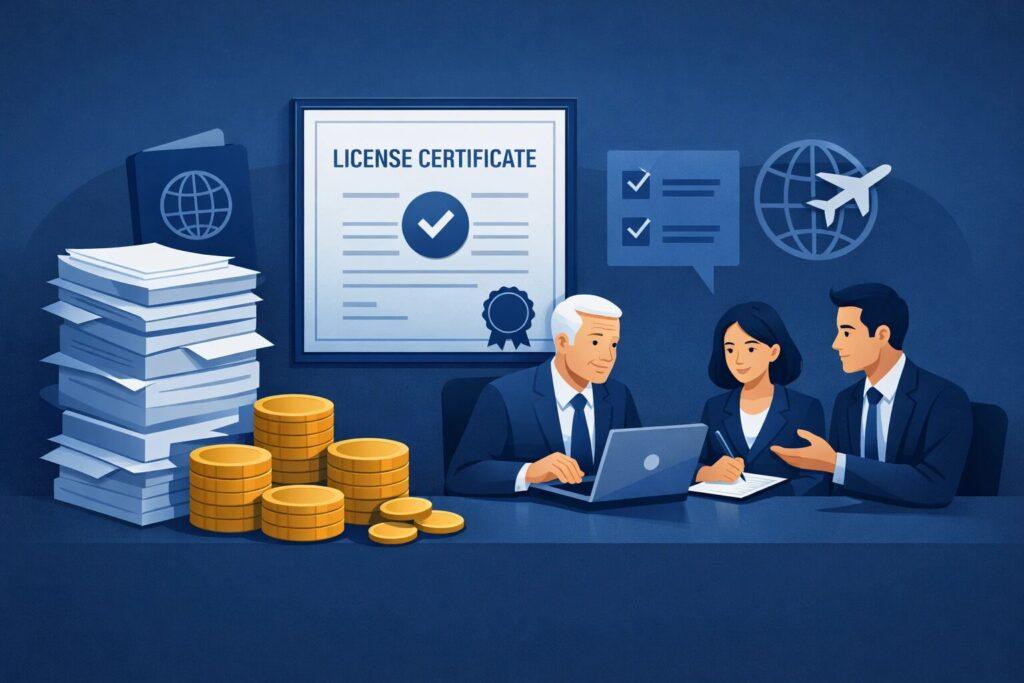
Before a company can even consider hiring a foreign national, they have to be approved by their country’s government. They need to secure a special license, a process that involves mountains of paperwork and costs thousands of dollars just to get on the list. This alone is why many small startups probably can’t sponsor you. Then, for every single employee they want to sponsor, they pay another round of significant fees like application charges, healthcare levies, skills charges.
Beyond the money, they take on a legal responsibility for you. They are essentially telling the government, “We vouch for this person.” If anything goes wrong, the consequences for the company can be severe, from fines to losing their license entirely. A company only goes through this trouble when they desperately need a skill set they cannot find in their own area.
The Candidate
For the job seeker, a sponsored visa is the golden ticket, a chance to have your dream job in your dream destination. But your right to live and work in the country is inextricably linked to that one employer.
You get the life-changing opportunity, but you trade a significant amount of professional freedom for it. If you decide to leave your job, or if you’re laid off, things change. You typically have a short window, often just 60 days, to find another licensed company willing and able to take over your sponsorship. Fail to do that, and you have to leave the country. It’s the core trade-off: opportunity for flexibility.
What Are the Main Requirements to Get Approved for Sponsorship?
Don’t forget that even if a company wants you, there’s a final boss: the government immigration officer. They have a checklist. They don’t know you and they also don’t know the company. All they have are boxes to tick, and your application must tick every single one.
1. The Job Itself Must Be Special.
Governments prioritize protecting the local job market. Sponsorship is therefore reserved for roles where there’s a proven shortage of domestic talent. These are compiled on official skilled occupation lists. You’ll find roles like software engineer, registered nurse, or civil engineer on these lists. You will not find roles like retail assistant or receptionist. The job must be considered skilled.
2. The Pay Must Be Right.
This is a simple, brutal line in the sand. Every skilled role on the list has a minimum salary threshold set by the government. If the threshold for your job is $65,000, an offer of $64,900 will get the application thrown out. No exceptions. It’s the government’s way of ensuring companies aren’t using the visa system to import cheap labor and exploit candidates.
3. You Must Be a “Good Bet”.
The government needs to trust you’re qualified and won’t cause problems. This means proving your credentials. Expect to provide official language test results (like the IELTS), police clearance certificates to show a clean criminal record, and copies of your degrees and professional certifications to prove you have the skills you claim.
Which Industries Are Hiring with Sponsorship Right Now?
To find a visa sponsoring company, you have to go where the skills shortages are most acute.
Technology
The need for tech talent is global. Companies are desperate for people who can build software, protect networks, and manage data, and that’s why they offer jobs with visa sponsorship for IT and Networking engineering for instance. The tech sector is well-versed in the sponsorship process and because this talent war has been going on for years, it is probably the most experienced industry when it comes to immigration.
Healthcare
Across the developed world, populations are aging, and there simply aren’t enough local nurses, doctors, and elder care specialists to meet the demand. Countries like the UK, Australia, and Canada are actively and aggressively recruiting medical talent from overseas.
Engineering
Someone has to build the green energy farms, the data centers, and the high-speed rail of the future. Huge infrastructure projects create a massive need for specialized engineers, a need that often can’t be filled locally.
Which Countries Have the Easiest Visa Sponsorship Routes?
No immigration system is “easy,” but some are more logical and straightforward than others.
Germany
Highly pragmatic, Germany has recognized its demographic need for skilled workers and has created pathways like the EU Blue Card to make the process more direct for qualified professionals.
Canada
Demand for skilled workers has increased the availability of visa sponsorship jobs in Canada. Canada’s points-based system is transparent. A job offer from a Canadian employer (sponsorship) is the single biggest points booster you can get, effectively moving your application to the top of the pile for permanent residency.
United Kingdom
Many international professionals actively search for visa sponsorship jobs in the UK because the country continues to face skills shortages in sectors like healthcare, engineering, and technology. The UK’s Skilled Worker visa has very clear, if strict, rules. If you have a licensed sponsor, an eligible job, and meet the salary and language scores, the path is very predictable.
The UAE
Here, sponsorship is the default for almost all professional expatriates. The system is entirely employer-driven and is famously efficient and fast.
How to Actually Find a Visa Sponsorship Job
Looking for a company to sponsor your visa feels impossible, right? You spend hours sifting through job posts, trying to guess which ones are open to hiring someone from abroad. It’s frustrating, and most of the time, a total waste of effort. Forget about downloading massive government lists of sponsors or trying to master weird search tricks like Software Engineer AND visa. There’s a much easier way.
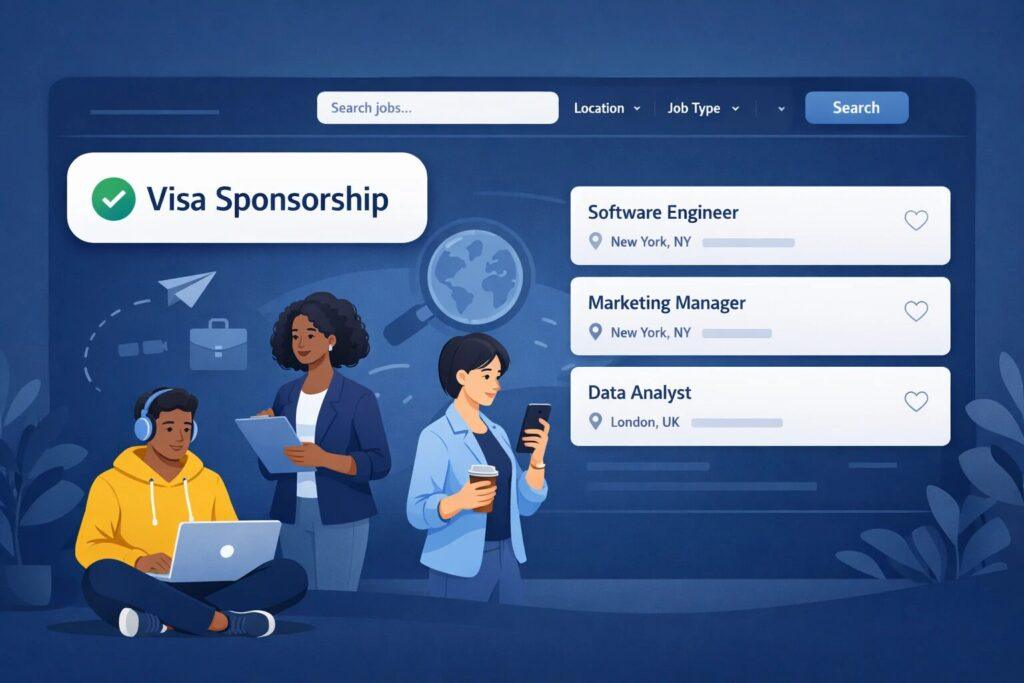
On a site like Jaabz, we’ve done all that hard work for you. You just click one simple filter: “Visa Sponsorship.” That’s it. Suddenly, you’re only seeing the jobs from companies that are actively looking to hire international talent. No more guessing. Just like that, now you know how to find visa sponsorship jobs!
And it’s not just the giant corporations. Jaabz helps you find those smaller companies that also offer sponsorship but are usually impossible to find. You get to see every single opportunity, big or small. Stop the guesswork and start finding the people who actually want to hire you.
It means the company will manage and pay for the legal process of getting your work visa. Essentially, they are confirming to the government that they need your specific skills and are sponsoring your right to work there.
It’s a significant investment for a company. The process involves high costs, a lot of paperwork, and legal responsibility for the employee. Because of this, companies usually only sponsor candidates for skilled roles they can’t fill with local talent.
Your visa is tied directly to your employer. If you leave, there’s usually a short grace period, often about 60 days, to find a new company willing to take over your sponsorship. If you can’t secure a new sponsor in that time, you’ll have to leave the country.
Yes, sponsorship is generally for skilled professional roles that are on a government’s official occupation list. The job offer must also meet a minimum salary threshold for that specific role. This is a strict rule to ensure companies aren’t underpaying foreign workers.
The most direct way is to use a job platform designed for this purpose. General job sites make it difficult, but a specialized site like Jaabz lets you apply a simple “visa sponsorship” filter. This ensures you’re only looking at roles where the company has already agreed to sponsor candidates.


