

Every few years, a new destination becomes the dreamland for ambitious software engineers and designers. What links all those journeys is one quiet document: a tech visa. It looks bureaucratic yet carries an enormous weight, permission to build a career on new soil.
This guide unpacks how these visas work, the major programs available in 2025, typical qualification paths, common missteps, and the ways Jaabz helps professionals find legitimate, visa‑eligible roles.
What a Tech Visa Is and How It Works
A tech visa is more than a stamp in a passport. Governments created these categories to attract highly qualified workers from technology and science sectors, people who can accelerate national innovation. The mechanism is straightforward: an employer or authority verifies the individual’s value, immigration offices check eligibility, and a residence permit follows.
Almost every modern program revolves around four pillars:
- Skill recognition – degrees or documented experience in computing, design, or engineering.
- Employer participation – either a firm must sponsor the visa, or, in newer models, a recognized body must endorse the applicant’s expertise.
- Salary alignment – minimum thresholds safeguard fair pay and prevent labor undercutting.
- Duration and mobility – many tech visas lead to permanent residence or make cross‑border transitions easier within specific regions.
The goal is economic efficiency: closing skill gaps without long political debates. For applicants, it becomes a structured way to leap from opportunity to reality.
Find Visa-Sponsored & Relocation Jobs Worldwide
Searching for global opportunities? Explore verified remote, relocation, and visa-sponsorship jobs curated to help you move your career forward.
Explore JobsPopular Visa Programs for Tech Professionals
Different countries sculpted their own versions of the same concept. Each one reflects its economic philosophy, America’s competitive entry, Europe’s collective mobility, Britain’s endorsement model, and France’s innovation‑driven pathway.
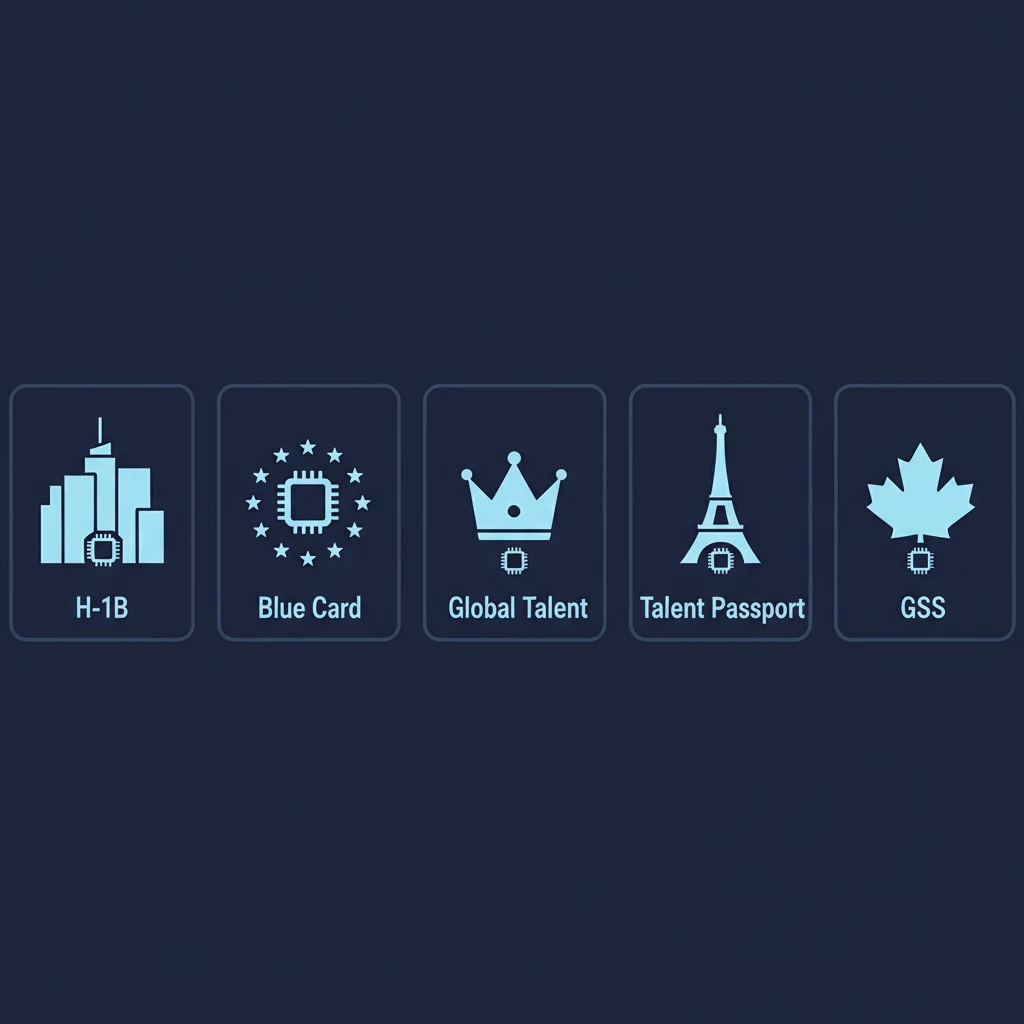
H‑1B – United States
The H‑1B remains the benchmark. Employers petition for experts in fields demanding specialized knowledge, from cybersecurity to UX design. Each spring a lottery decides who can proceed, creating both anticipation and anxiety across the global developer community.
The U.S. market offers unmatched exposure, yet the route is procedural: approval letters, credential evaluations, and careful compliance with Department of Labor regulations. For those selected, the experience reshapes a resume forever.
EU Blue Card – Germany and Other EU States
Europe’s answer is a single color: Blue.
This card combines work and residence rights and encourages lateral movement inside the bloc. A software architect could begin a role in Munich, later relocate to Amsterdam, and keep career continuity. Salary minimums differ by country, Germany’s is roughly tied to the national average income.
Its appeal lies in mobility. Professionals who prefer European cultural diversity often choose the EU Blue Card as their entry point to a pan‑European career.
Global Talent Visa – United Kingdom
Where the H‑1B relies on sponsorship, the UK model relies on recognition. Under its Global Talent Visa, endorsement from an accredited organization such as Tech Nation validates an applicant’s leadership potential or significant contribution to the technology sector.
It suits experienced engineers or designers leading projects rather than those starting out. Once granted, the holder can work for multiple companies, shift disciplines, or even build a start‑up, without reapplying each time.
Talent Passport – France
France’s Talent Passport blends pragmatism with cultural openness. Applicants must prove either direct employment in an innovative enterprise or a concrete entrepreneurial project backed by funding.
Processing is faster than many expect – often within weeks – and spouses receive residence authorization almost automatically. From an ecosystem standpoint, it feeds talent into Paris’s expanding tech corridors and satellite hubs in Lyon and Toulouse.
Here’s a quick comparison table:
| Country/Region | Visa Name | Core Eligibility | Duration | Highlights |
| United States | H-1B Visa | Bachelor’s degree or equivalent, employer sponsorship | 3 to 6 years | Path to Green Card, access to U.S. tech hubs |
| Germany / EU | EU Blue Card | University degree + salary-threshold job offer | Up to 4 years | Operates across multiple EU states |
| United Kingdom | Global Talent Visa | Endorsement by recognized body | Up to 5 years | Freedom to change employers or start a business |
| France | Talent Passport | Contract or project in prioritized tech/innovation fields | 4 years | Family residence rights, simplified renewal |
| Canada | Global Skills Strategy | LMIA-exempt technology jobs | 2 years initially | Two-week processing, open permit for spouse |
How to Qualify for a Tech Visa
Success begins long before an application is sent. Decision makers look for consistency between what an applicant can demonstrate and what a country specifically lacks.
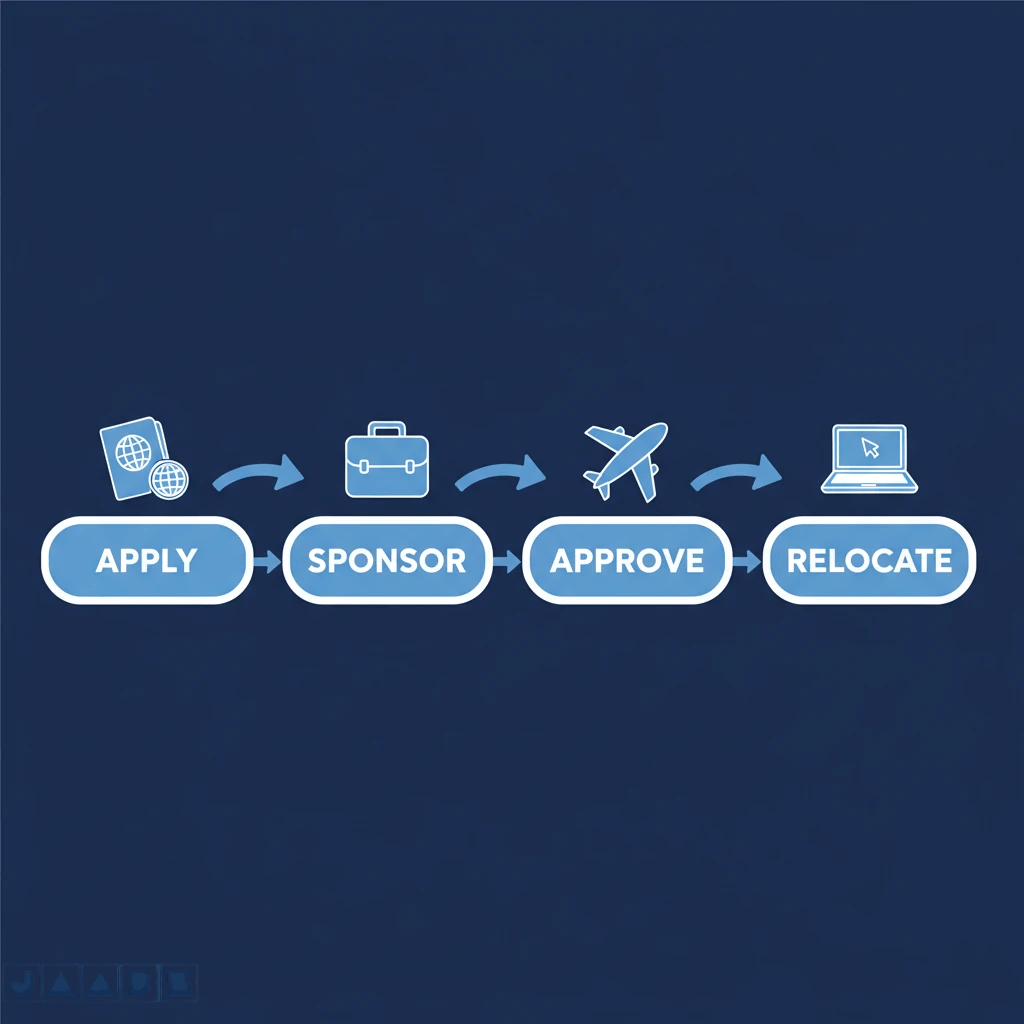
Essential factors include:
- Recognized degree or track record. Diploma equivalency may be required, especially in the EU. Extensive experience can substitute for formal education in certain systems.
- Confirmed role offer or endorsement. For most programs, a signed employment contract or institutional backing is a prerequisite.
- Financial alignment. Meeting salary thresholds proves the role qualifies as “high‑skill.”
- Credible documentation. Language certificates, previous work references, and notarized translations prevent rejections.
- Clean compliance. Authorities habitually check criminal records or previous visa overstays.
Meticulous preparation shortens processing time and avoids costly restarts. For professionals still exploring sponsoring employers, We maintain an updated directory of verified organizations actively hiring international tech talent.
Top Tech Companies Offering Visa Sponsorship in 2025
Common Mistakes Applicants Make
Even qualified candidates stumble for small reasons that bureaucracies treat as critical.
❌Missing sponsor authorization. Submitting documentation before obtaining the company’s certified petition number leads to automatic refusal in the United States.
❌Under‑calculated salaries. If an offered sum falls below the official threshold, authorities simply halt the file.
❌Timing misjudgment. Certain quotas open briefly; completing forms after the window closes means waiting another year.
❌Document inconsistency. Translated degrees must match spelling and dates across multiple papers; mismatched data often triggers security reviews.
❌Confusing residence and work permits. Some nations release two separate approvals—failure to collect both within stated periods can void the process.
The safest approach is to review each stage through the lens of a project rollout: requirements, dependencies, quality checks, deployment.
How Jaabz Helps You Find Visa-Eligible Jobs
Jaabz was built around one objective: reducing friction between global tech talent and employers capable of sponsorship.
Our platform’s algorithm filters postings by visa viability. Each listing is categorized by country, permit type, and company record, giving jobseekers a precise understanding of whether a role aligns with their immigration goals.
Through curated guidance, we also offer:
- Visa pathway overviews, showing which routes correspond to each profession.
- Application readiness assessments, comparing resumes with international compliance standards.
- Peer communities for relocation support, housing suggestions, and cultural onboarding.
This systemic approach saves applicants weeks of unproductive searching and protects employers from mismatched expectations.
Final Perspective
Technology flows across borders more quickly than policies can adapt. Every major economy now treats digital expertise as a national asset, yet each enforces its own definition of “qualified talent.”
Understanding those subtleties transforms immigration from blind paperwork into an informed career strategy.
From the bustling product teams in London’s Shoreditch to the emerging cloud‑engineering clusters in Berlin, companies continue to compete for skilled professionals who can code, build, and design the next ambitious platform. Tech visas are the quiet infrastructure that make those collaborations possible.
Jaabz continues to map that landscape, linking real opportunities to people ready to contribute globally. With detailed program data, employer verification, and human‑centered design, we turn relocation into a practical extension of professional growth rather than an administrative gamble.
FAQ
Which visa is easiest for tech professionals in 2025?
Ease depends on profile and speed expectation. Canada’s Global Skills Strategy currently tops efficiency lists with two‑week processing. France’s Talent Passport offers steady approval for design and engineering roles, while the EU Blue Card continues expanding accessibility as economies face digital‑talent shortages.
What is the difference between the EU Blue Card and H‑1B?
The H‑1B lets you work only for one U.S. employer, while the EU Blue Card covers several European countries and lets you move between them once you meet certain conditions.
Can a tech visa be obtained without a job offer?
Usually no. Exceptions include the UK’s Global Talent Visa or certain founder‑focused programs where endorsement substitutes for employment. Traditional visas – H‑1B, Blue Card, Talent Passport – demand a contract before processing.


One comment